Your PG&E Benefits Have More Moving Parts Than Most Advisors Know How to Handle.
Two different pension formulas. A retiree medical account that depletes, and runs out before Medicare if you retire too early. A 401(k) match structure that rewards Cash Balance participants more than Final Pay. A spillover election most employees never set up. These aren't generic retirement questions. They're PG&E-specific decisions that require someone who knows how the pieces fit together.
Confidential · Available nationwide
Jay Chang is not affiliated with, endorsed by, or sponsored by Pacific Gas and Electric Company (PG&E) or any of its subsidiaries. All company names and trademarks are the property of their respective owners.
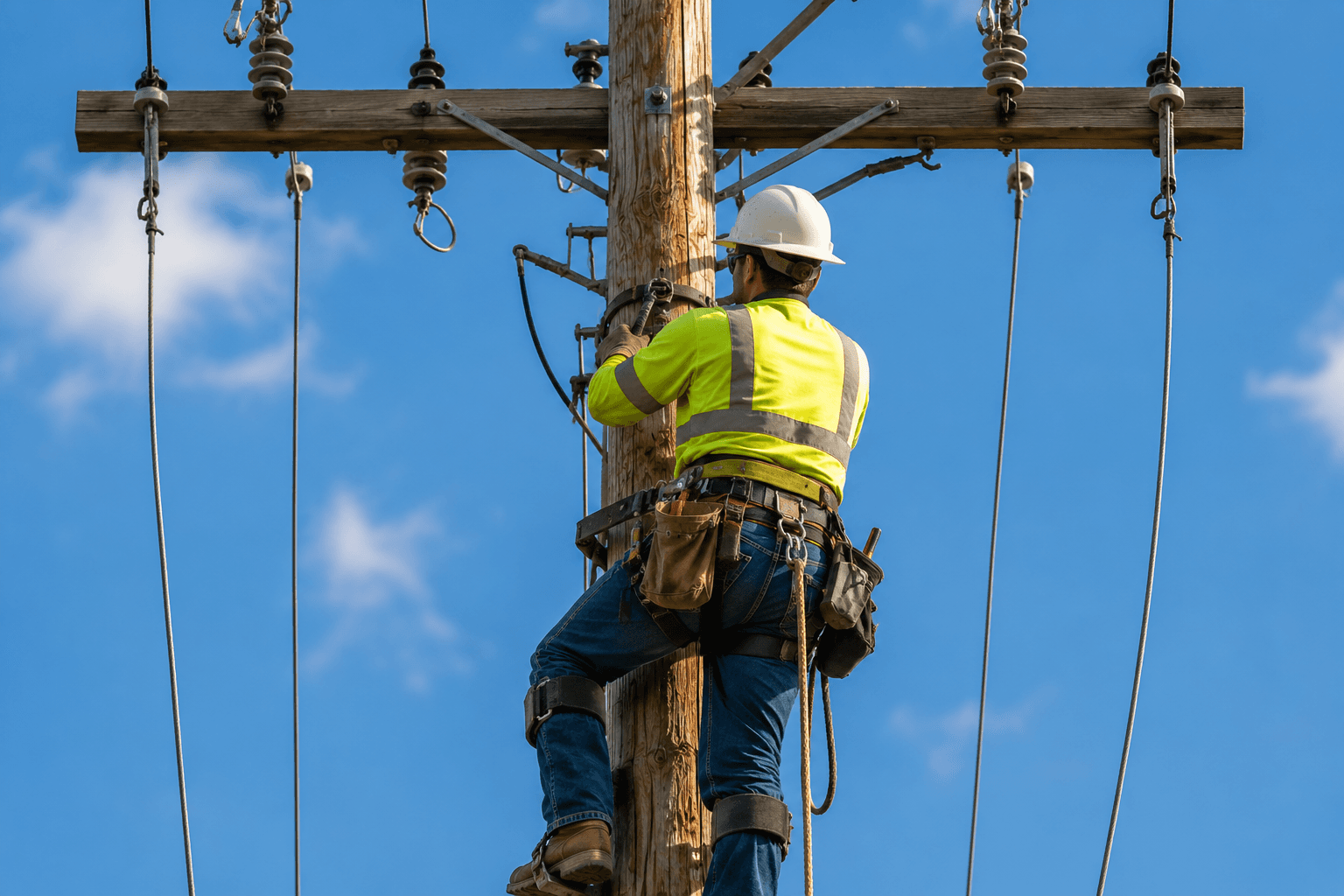
I've worked with PG&E employees across union and management roles: IBEW 1245 linemen with 25 years of Final Pay accruals, engineers in ESC Local 20 modeling Cash Balance projections, and management employees trying to understand what the RMSA actually covers and for how long.
The RMSA is the piece most people don't fully understand until too late. It seems like a healthcare safety net, but it's a fixed account with a depletion clock. If you retire at 57 and your RMSA runs out at 63, you're covering two years of healthcare costs entirely out of pocket before Medicare. That gap changes the math on when to retire. I model it for every PG&E client before we finalize a retirement date.
Michael Lee on my team got into this work helping his mother navigate her Kaiser Permanente retirement, and has since worked with families at PG&E, AT&T, Chevron, and Northrop. Between us, we know what questions to ask before you sign anything.
- Jay Chang, VP, Wealth Advisor
What PG&E Employees Actually Have, and What to Do With It
PG&E offers some of the most valuable utility benefits in the country. The challenge isn't that the benefits are bad, it's that they interact in ways that aren't obvious until you model them together.
Two Pension Formulas: Which One You're In Changes Everything
Final Pay Pension (hired before 2013)
A traditional defined benefit formula calculated on years of credited service and final pay. Union (IBEW/ESC) employees use the last 30 days of base pay. Management and A&T employees use the highest 36-consecutive-month average. There is generally no lump sum option, and your benefit pays as a monthly annuity for life, with elections for survivor coverage. The benefit multiplier is not publicly disclosed; PG&E's pension center at 1-800-700-0057 can confirm yours.
Cash Balance Pension (hired 2013+)
Works like a growing hypothetical account. PG&E credits 5–10% of your annual base salary based on your age+service points, plus quarterly interest credits tied to the 30-year Treasury rate. At retirement, you can take the full balance as a lump sum and roll it into an IRA, a significant advantage the Final Pay plan doesn't offer. The account is also portable: if you leave PG&E before retirement, the vested balance goes with you.
Early Retirement & Reduction Factors
PG&E allows early retirement at age 55. For Final Pay participants, starting at 55 can reduce the benefit by as much as roughly a quarter compared to waiting, and the reduction shrinks each year you delay. The exact factors are in the plan's Benefits Handbook and your PensionConnect estimate. Every year you work past 55 meaningfully increases your lifetime pension income, and we model the exact breakeven for your situation.
The RMSA: The Benefit Most PG&E Employees Misunderstand
What It Is
PG&E funds a Retiree Medical Savings Account on your behalf starting at age 45. Annual contributions increase once you reach 20 years of service. The account earns interest while you work and can be accessed at retirement (age 55+ with 10+ years of service) to pay PG&E-sponsored retiree medical premiums. You cannot contribute to it yourself, and it can't be used for anything other than those premiums.
The Depletion Problem
The RMSA is a fixed account. As you draw premiums in retirement, the balance declines. If healthcare costs rise faster than the post-retirement interest rate, the account depletes faster than expected. For employees who retire early, say at 57, there's a real risk the RMSA runs out two or three years before Medicare eligibility at 65. Those gap years mean paying full healthcare costs from personal savings. We calculate your specific depletion timeline as part of every PG&E retirement plan we build. I also wrote a full explainer on how the RMSA works and when it runs out.
How It Changes Your Retirement Date
The RMSA depletion date is often the hidden constraint in PG&E retirement timing. It's not just about pension benefit, it's about whether your healthcare is covered to 65. Sometimes working one or two additional years meaningfully extends your RMSA coverage and eliminates the gap entirely.
401(k) Spillover & Match Optimization
Match Structure by Plan Type
Your 401(k) match depends on which pension plan you're in. Final Pay participants get a 75% match (management) or 60% match (union) up to 6% of salary. Cash Balance participants, all hired 2013 or later, or pre-2013 employees who elected to switch, receive a 75% match up to 8% of salary plus an additional 2.4% employer contribution regardless of what you contribute. Cash Balance participants have a materially better 401(k) structure.
The Spillover Election
When your pre-tax 401(k) contributions hit the IRS annual limit mid-year, your employer match stops unless you've set up the after-tax spillover election. With it active, contributions automatically convert to after-tax and the match continues. For Cash Balance participants, this is worth roughly $1,200 a year in match that would otherwise be forfeited, per the union's published example. Most employees never set this up, and there's no automatic notification when contributions stop.
Mega Backdoor Roth
PG&E's 401(k) plan allows after-tax contributions and in-service distributions, which means eligible employees can roll those contributions into a Roth IRA, adding tens of thousands of dollars in tax-free retirement savings beyond the standard limits. As of January 2026, IBEW 1245 members also gained access to the Roth 401(k) option for the first time, creating additional tax-diversification opportunities.
Nonqualified Deferred Comp & Retirement Income Coordination
SRSP & SERP (Management)
Eligible PG&E management employees can defer salary and bonus into the Supplemental Retirement Savings Plan (SRSP): a nonqualified deferred compensation plan that mirrors the 401(k) above IRS limits. The SERP provides additional defined benefit accruals for executives in qualifying roles. Both plans are unfunded, unsecured obligations of PG&E, meaning they sit in the same creditor queue as general liabilities if the company were to face financial distress again.
Retirement Income Sequencing
Pension income, SRSP distributions, and Social Security all count as ordinary income. Without deliberate sequencing, they can stack into a high bracket in the first years of retirement, especially if SRSP distributions and pension both start in year one. We model the distribution schedule across multiple years to stay in the most efficient brackets, including Roth conversion opportunities in low-income gap years.
California Tax Considerations
Most PG&E employees work in California, which taxes pension income as ordinary income at rates up to 13.3%. If you're considering establishing residence in Nevada or Arizona before retirement, particularly if you have deferred comp distributions ahead, the timing of that move relative to your first distributions can have material tax consequences.
Questions I Get Most Often
What's the difference between Final Pay and Cash Balance?
Final Pay is a traditional pension: your benefit is a monthly annuity for life based on years of service and your final pay. No lump sum. Cash Balance is a hybrid: it grows like an account (5–10% annual pay credits plus 30-year Treasury interest) and you can take the balance as a lump sum at retirement and roll it into an IRA. Hire date is the main determinant: before 2013 usually means Final Pay, 2013 or later means Cash Balance. Some pre-2013 employees made an irrevocable election in 2013 to switch. For the full side-by-side, see my guide to PG&E Cash Balance vs. Final Pay.
How much will my RMSA be reduced if I retire at 57 vs. 62?
The RMSA balance at retirement is the same, accumulated by PG&E regardless of when you leave (as long as you meet the eligibility minimums). The difference is how long it has to last. Retiring at 57 means the account needs to cover 8 years of premiums before Medicare at 65. Retiring at 62 means only 3 years. Premium inflation compounds the problem, the account depletes faster in later years. We model this precisely using your specific balance and current premium estimates so you know exactly when coverage runs out.
I missed the spillover election. Is it too late?
No, you can typically set up or change the spillover election through Fidelity NetBenefits. The key is making the change before your pre-tax contributions hit the IRS annual limit for the year. If you already hit the limit this year without the election, you've forfeited match for the rest of this year, but you can set it up now for next year. This is one of the first things we check for every PG&E employee I work with.
Should I take my Cash Balance pension as a lump sum or monthly annuity?
For Cash Balance participants, the lump sum is simply your account balance, and there's no interest rate sensitivity the way there is with AT&T or other employer lump sum calculations. The decision comes down to: do you want guaranteed monthly income for life (annuity), or do you want the flexibility and growth potential of investing the lump sum yourself (rollover to IRA)? Your health, other income sources, spouse situation, and risk tolerance all factor in. We model both options in the context of your full retirement income plan.
I'm in IBEW 1245: how is my situation different from management?
Several ways matter for planning. Your Final Pay pension uses the last 30 days of base pay (management uses a 36-month average), your 401(k) match is 60% up to 6% (vs. management's 75%), you cannot be involuntarily moved from Final Pay to Cash Balance, and the Roth 401(k) option wasn't available to IBEW 1245 members until January 2026. Your retirement timeline may also be shaped differently by IBEW contract provisions around retiree medical and pension eligibility. I work with both union and management PG&E employees and know which details vary by classification.
When is the right time to retire from PG&E?
For most PG&E employees, the answer involves three dates working together: the age at which your early retirement reduction becomes acceptable (or disappears entirely), the year your RMSA provides full coverage to Medicare, and the point at which additional work years stop adding meaningful value to your pension accrual. These don't always align on the same birthday. We build a timeline that shows the financial impact of each retirement date so the right window becomes clear. I walk through the full framework in When Can I Retire From PG&E?, and the complete map of every benefit is in my PG&E retirement benefits guide.
What PG&E Employee Financial Planning Actually Looks Like
Pension Plan Election
We identify your plan type, model the annuity options for Final Pay participants or lump sum vs. annuity for Cash Balance participants, and compare every payout scenario against your income needs and spouse's situation.
RMSA Depletion Planning
We calculate your RMSA balance at each potential retirement age, model the depletion timeline under realistic premium inflation, and identify the Medicare bridge gap, then build a retirement date recommendation that minimizes uncovered healthcare exposure.
Retirement Timing Optimization
We model the financial impact of every retirement age from 55 to 65: pension benefit, RMSA coverage, Social Security interaction, and savings drawdown, on a single timeline so the optimal window is clear.
401(k) & Spillover Maximization
We set up the spillover election, identify how much match is currently being forfeited, evaluate the mega backdoor Roth opportunity, and build a savings rate that captures every dollar of employer contribution available to you.
California Tax Planning
We model the tax impact of pension income, SRSP distributions, and Social Security under California's 13.3% top marginal rate, and evaluate whether establishing Arizona or Nevada residency before distributions start could meaningfully reduce your lifetime tax bill.
Retirement Income Sequencing
Pension, SRSP, Social Security, and 401(k) withdrawals all stack as taxable income. We sequence the sources year by year to stay in the lowest brackets, fill Roth conversion windows during low-income years, and minimize your total tax burden across retirement.
Also work at AT&T, Verizon, T-Mobile, or SRP? See the full Telecom & Utilities planning overview →
Let's Look at Your PG&E Benefits Together.
Bring what you have: a benefits statement, a pension estimate, your current contribution rate. I'll show you what it all means and where the real decisions are.
Schedule Your PG&E Benefits ReviewConfidential · Available nationwide